Acupressure may provide short-term relief for uncomplicated muscle tension, stiffness and some headache-related discomfort, but it cannot diagnose or repair every cause of pain. You will be able to match common symptoms with an appropriate level of care, prepare for a session, recognise safety concerns and compare a clinic’s approach with other options.
Key takeaways
- Discuss stable neck, shoulder, muscle, back, headache, and foot discomfort.
- Seek medical assessment first for sudden, severe, worsening, or neurological symptoms.
- Expect a symptom review, pressure-point treatment, feedback checks, and aftercare advice.
- Compare acupressure with massage, exercise, and medical care before choosing treatment.
Which Everyday Pains Are Reasonable to Discuss with an Acupressure Practitioner?
Neck stiffness, shoulder tension, uncomplicated backache, muscle soreness after ordinary activity, tension-related headaches, and mild foot discomfort are reasonable starting points for an acupressure conversation when symptoms are stable and no warning signs are present. An acupressure clinic for everyday body pain may offer short-term relief, easier movement, or relaxation—not a guaranteed cure.
| Symptom | Reasonable discussion | Realistic aim |
|---|---|---|
| Neck stiffness | Pain after desk work or sleep | Reduce tightness and improve movement |
| Shoulder tension | Local muscular aching without injury | Ease tension and tenderness |
| Backache | Mild, stable discomfort without leg weakness | Temporary pain relief and better comfort |
| Muscle soreness | Post-activity soreness without swelling or trauma | Relaxation and reduced soreness |
| Tension headache | Pressure-like pain linked to tight neck or shoulders | Reduce discomfort, not prevent every headache |
| Foot discomfort | Aching after standing or routine activity | Short-term comfort and easier walking |
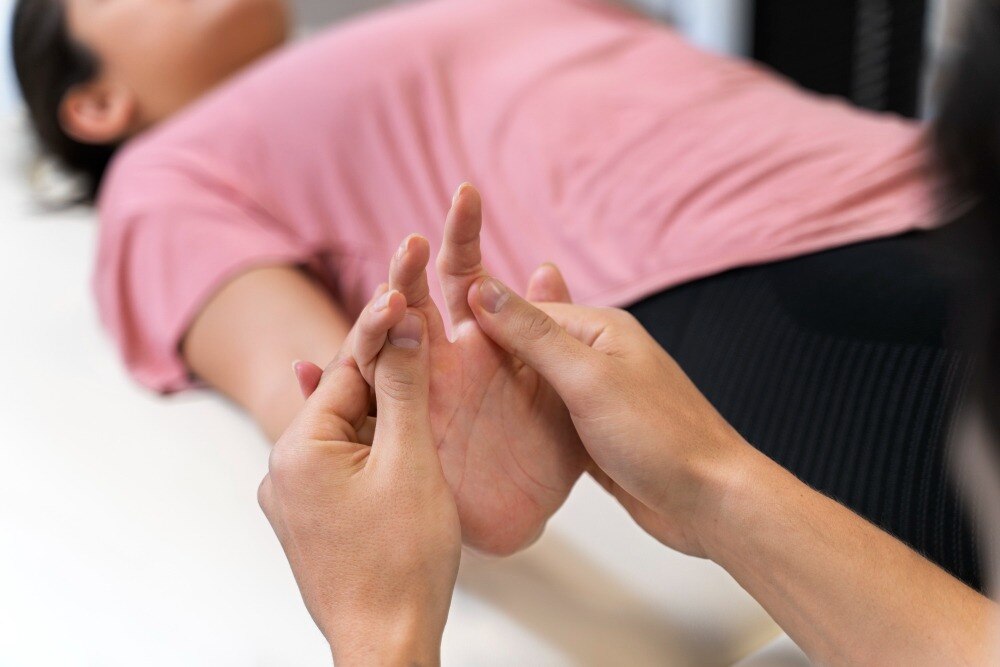
An acupressure practitioner uses sustained or rhythmic pressure from fingers, thumbs, hands, or a device without piercing the skin. Benefits can vary by condition and person, and research on acupressure is less extensive and consistent than research on acupuncture.
Relieving a symptom does not identify or correct its cause. Pressure may reduce muscle tension while an untreated nerve problem, joint injury, inflammatory disease, or other condition continues. Skip an acupressure clinic and seek medical assessment for unexplained, worsening, disabling, or injury-related pain.
When Does Body Pain Need a Doctor Before Pressure Therapy?
A clinic should pause pressure therapy when pain could signal an untreated injury or illness. Seek medical assessment first rather than using an acupressure near me search as your next step.
- Pain after a road crash, fall, heavy lift, or other major trauma
- New difficulty controlling urine or stool
- Numbness around the genitals, inner thighs, or anus
- Increasing leg weakness, inability to walk normally, or rapidly worsening pain
- Chest pain, breathlessness, fainting, sudden severe headache, or pain with high fever
Tell the practitioner about these conditions before any hands-on session:
| Condition, medicine, or skin problem | What to disclose | Why it matters |
|---|---|---|
| Bleeding disorder or blood-thinning medicine | Warfarin, apixaban, aspirin, clopidogrel, or easy bruising | Firm pressure can cause bruising or bleeding |
| Diabetes or reduced sensation | Numb feet, neuropathy, poor circulation, or slow-healing wounds | You may not feel excessive pressure or skin damage |
| Osteoporosis, recent fracture, cancer, or spinal disease | Diagnosis, affected areas, and current treatment | Pressure may be unsuitable over vulnerable tissue |
| Pregnancy or recent surgery | Stage of pregnancy, operation date, and recovery instructions | Point selection and pressure require clinical caution |
| Rash, open wound, infection, swelling, or unexplained bruising | Show the exact area and describe changes | Do not press damaged or infected skin |
Stop immediately for severe pain, persistent numbness, fainting, nausea that does not settle, or worsening symptoms. A responsible practitioner refers you to a doctor instead of treating an unexplained problem with pressure.
What Happens During an Acupressure Appointment?
A first visit should begin with questions, not immediate pressure. An acupressure clinic should ask where the pain is, how long it has lasted, how severe it feels, what worsens it, and whether an injury, medical condition, medicine or warning symptom could change the plan.
1. You describe your pain and movement limits, such as difficulty turning your neck, walking or sleeping. The practitioner checks the area and identifies tender points linked to your symptoms and tissue sensitivity.
2. You agree on the technique before treatment starts. Pressure may be sustained with a thumb, finger or hand, or applied rhythmically; the skin is not pierced.
3. The practitioner explains the expected session length, asks for consent, and checks your response during the work. Agree on a practical outcome, such as easier movement, longer walking tolerance or less pain interference, so you can judge benefit after a small number of visits.
4. After treatment, you receive instructions for monitoring soreness and deciding whether to return. Note your pain, function and any new symptoms rather than assuming a strong sensation means the treatment worked.
Firm pressure can feel intense, tender or stretching, but it should remain tolerable. Mild local soreness, temporary tenderness or a small bruise can occur. Tell the practitioner immediately about nausea, light-headedness or increasing pain; stop if you develop severe pain, persistent numbness, fainting or worsening symptoms, and seek medical advice.
Pain after major trauma or new bladder, bowel or progressive leg symptoms requires urgent assessment, not an appointment.
How Does Acupressure Compare with Massage, Exercise and Other Care?
An acupressure clinic for everyday body pain applies sustained or rhythmic pressure with fingers, thumbs, hands or tools; it does not pierce the skin. Its realistic aim is short-term pain relief or relaxation, not correction of an undiagnosed structural problem.
| Option | Practical difference | Best use |
|---|---|---|
| Acupressure | Point pressure without needles; tenderness can occur afterward | Trial for muscle tension or uncomplicated aches |
| Massage | Broad rubbing, kneading or tissue pressure | General muscle tightness and relaxation |
| Acupuncture | Sterile needles enter selected points | Conditions where acupuncture has been studied, such as some chronic back or neck pain |
| Chiropractic treatment | Joint or spinal assessment, with manual techniques that can include manipulation | A musculoskeletal problem after appropriate screening |
| Physiotherapy | Exercise, movement training and rehabilitation, sometimes with manual therapy | Restoring strength, mobility and daily function |
| Self-care | Activity, pacing, heat or cold, sleep and home exercises | First-line management for many uncomplicated aches |
For back pain, manual treatment works best as part of a plan that includes exercise rather than as a stand-alone cure. Choose the option that matches your limitation: massage may ease tightness, while physiotherapy is more useful when weakness or restricted movement stops you doing normal tasks.
Judge a short trial by function, not by a warm, relaxed or briefly numb feeling. Record one target before starting, such as walking time, sleep disruption, neck rotation or pain interference, and reassess after a small number of visits. Stop and seek medical advice for severe pain, persistent numbness, fainting or worsening symptoms.
Repeated sessions without functional improvement deserve an independent evaluation.
How Can You Choose a Suitable Local Acupressure Clinic?
Choose the clinic that can explain who will treat you, what acupressure can and cannot address, and how safety will be managed. An acupressure clinic pcmc listing, acupressure clinic wakad search result or acupressure near me map result proves convenience, not quality.
| Check | What to verify | Warning sign |
|---|---|---|
| Training and scope | Practitioner’s full name, identifiable training, and whether the session uses pressure without skin penetration | Vague credentials or promises to diagnose and correct every condition |
| Screening and hygiene | Questions about pain location, duration, severity, injuries, illnesses, medicines and warning symptoms; handwashing, clean linens and disinfected reusable equipment | No health history, rushed treatment or visibly unclean surfaces |
| Fees and consent | Fee per session, expected duration, cancellation terms and permission before each technique | Surprise charges or pressure to buy a long package |
| Goals and referral | A baseline such as pain during walking or neck rotation, a review date and referral when symptoms exceed the practitioner’s scope | “Permanent cure” claims or refusal to recommend a doctor |
Ask whether the practitioner will stop for severe pain, numbness, fainting or worsening symptoms. For low-back pain, ask how they screen for specific causes; routine imaging is not automatically needed, but unexplained warning signs require medical assessment.
If you compare Dikshant Acupuncture and Chiropractic Center PCMC with other local options, put its answers to these questions—not its address or service menu—beside theirs. Choose the clinic that records progress and refers appropriately.
Related service
Acupressure Clinic in PCMC Acupressure Clinic in Wakad, Ravet, Nigdi, Bhosari, PCMC ₹300 Dikshant Acupuncture and Chiropractic Center is a renowned Acupressure Clinic in Chinchwad, Nigdi, Chikhali, Bhosari, Pimpri, Kalewadi, Rahatani,... View service → |
Frequently asked questions
Which everyday pains are reasonable to discuss with an acupressure practitioner?
Stable neck stiffness, shoulder tension, uncomplicated backache, ordinary muscle soreness, tension-related headaches, and mild foot discomfort are reasonable starting points when no warning signs are present.
When does body pain need a doctor before pressure therapy?
See a doctor first for sudden or severe pain, pain after a significant injury, fever, unexplained weight loss, chest pain, weakness, numbness, loss of bladder or bowel control, or symptoms that keep worsening.
What happens during an acupressure appointment?
The practitioner reviews your symptoms, health history, medications, and goals before applying measured finger or hand pressure to selected areas. Tell them immediately if pressure causes sharp pain, dizziness, numbness, or worsening symptoms.
How does acupressure compare with massage and exercise?
Acupressure uses targeted sustained pressure, massage works across soft tissue, and exercise builds strength and movement capacity. The best choice depends on the cause, duration, and severity of your pain.
How can you choose a suitable local acupressure clinic?
Ask about practitioner training, hygiene, consent, treatment limits, session length, follow-up, and referral procedures. Choose a clinic that screens for warning signs and does not promise a guaranteed cure.
Keywords