Restricted movement can come from muscle tightness, joint disease, nerve compression, injury or a condition that needs medical assessment, and cupping is not equally suitable for all of them. By the end, you will be able to match cupping with the likely cause, compare it with rehabilitation, check safety standards and measure whether treatment improves useful movement.
Key takeaways
- Use cupping mainly for short-term relief of muscular tightness and soreness.
- Track range of motion, pain, and function before judging results.
- Cupping should support rehabilitation, not replace exercise or medical assessment.
- Check practitioner training, hygiene procedures, consent, and treatment risks before booking.
Which mobility problems might cupping reasonably address?
Cupping is most plausible as short-term symptom relief when a mobility problem feels muscular: soreness after activity, back tightness, neck stiffness, restricted shoulder movement or hip discomfort. It may reduce the feeling of tension without correcting the structure causing it.
| Problem | What cupping might reasonably do | Why it is not the main treatment |
|---|---|---|
| Muscle soreness or tightness | Offer temporary relief | Benefits may fade, and movement may not improve |
| Neck, back, shoulder or hip discomfort | Ease symptoms linked to muscle tension | Persistent restriction needs assessment and rehabilitation |
| Arthritis or joint damage | Possibly provide comfort around the area | It does not reverse cartilage loss or repair a damaged joint |
| Ligament or tendon injury | Reduce surrounding soreness | Healing and loading need an appropriate diagnosis and plan |
| Nerve compression or neurological disease | Not treat the cause of weakness or altered sensation | Nerves and neurological conditions require medical evaluation |
A tight-feeling muscle is different from a damaged or diseased structure. Do not make a cupping therapy clinic for mobility problems your first stop when the cause is undiagnosed, progressive, traumatic or neurological.
Seek medical evaluation first if you have:
- Sudden weakness or numbness
- Loss of bladder or bowel control
- A severe injury
- Fever with a hot, swollen joint
- Unexplained weight loss
- Persistent night pain
For these warning signs, symptom relief must not delay diagnosis. Cupping is an optional adjunct only after serious causes have been considered.
What happens during cupping, and what can the evidence support?
A sound session begins with a cupping therapy clinic discussing your complaint, examining the area and agreeing on a goal, such as reducing neck tightness or making shoulder movement easier.
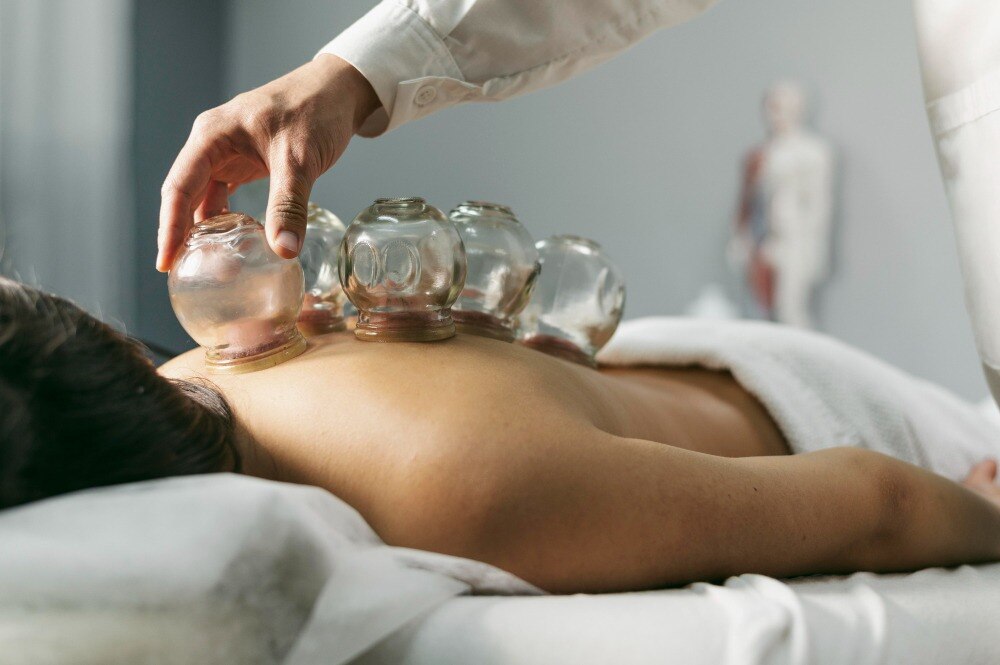
- The practitioner places cups on prepared skin and applies suction.
- They monitor skin colour, discomfort and dizziness while the cups remain in place.
- They remove the cups, inspect the skin and explain aftercare, including keeping irritated areas clean and avoiding further friction.
- You should confirm the technique before treatment because “cupping” can mean different procedures.
| Technique | What happens | Main trade-off |
|---|---|---|
| Dry cupping | Cups create suction without breaking the skin. | Circular marks and tenderness can occur. |
| Moving cupping | Lubricated cups are moved across the skin under suction. | Friction can increase irritation or soreness. |
| Wet cupping | The practitioner punctures the skin, then applies cups to draw blood. | Bleeding, infection, scarring and blood-borne transmission risks increase. |
The U.S. National Center for Complementary and Integrative Health describes cupping research as limited and often low quality. The most defensible expectation is possible short-term relief of pain or muscle tightness, with uncertain effects on lasting mobility or function.
Marks are temporary bruising from suction and small-vessel injury, not proof that toxins left your body. Cupping does not demonstrate that a joint was realigned, arthritis reversed, a tendon repaired or neurological weakness treated. Mobility may not improve at all.
How should cupping fit with rehabilitation and measurable mobility goals?
Exercise-led rehabilitation remains central for diagnosed osteoarthritis, persistent low-back pain, weakness and loss of function. Physiotherapy may combine therapeutic exercise, strength training and mobility work; stretching, massage, chiropractic care, acupuncture, medication and cupping address different needs and do not replace diagnosis or progressive loading.
| Option | Main role | Limitation |
|---|---|---|
| Physiotherapy | Assesses movement and builds a rehabilitation plan | Progress depends on regular practice |
| Therapeutic exercise and strength training | Improve capacity, control and function | Gains require repeated effort |
| Mobility work and stretching | Address restricted movement or flexibility | Do not repair damaged tissue |
| Massage or cupping | May give short-term relief of muscle tightness | Looseness can fade without better function |
| Chiropractic care or acupuncture | May support selected symptom-management plans | Neither replaces exercise or medical assessment |
| Medication | Reduces pain enough to support activity | Does not restore strength or explain the cause |
| Medical assessment | Checks for joint, nerve, spinal or systemic disease | Necessary when symptoms are unexplained or worsening |
Use this procedure to judge whether cupping adds value:
1. Set one target before treatment: reach a marked height with shoulder flexion, turn your neck farther, walk 500 metres, or rise from a chair without increased pain.
2. Record range of motion, pain, function and exercise tolerance, then follow the agreed home-exercise plan. Add cupping as one intervention at a time so you can identify benefit or adverse effects.
3. Repeat the same task after the immediate looseness fades. If the target is unchanged, repeated cupping is not evidence of improved mobility.
How can you check whether a clinic is safe and appropriate?
Before booking, ask questions that reveal safety practice, clinical scope and whether the appointment suits your problem.
- What training and relevant registration do you hold? Will you assess my mobility complaint, obtain informed consent, record the assessment and refer me for diagnosis when symptoms fall outside your scope?
- Is the session dry or wet cupping? If wet, are lancets, blades and other skin-penetrating items sterile and single-use? How are blood-contaminated sharps discarded?
- How are hands, the treatment area and treatment surfaces cleaned between patients? Ask what skin preparation is used and whether reusable cups are cleaned and disinfected between sessions.
Seek medical advice before cupping if you take blood thinners, have a bleeding disorder or anemia, are pregnant, have diabetes, are receiving cancer treatment, or have fever or unexplained swelling. Do not allow treatment over skin infection, eczema, open wounds or varicose veins; avoid cupping over an area with suspected thrombosis.
Searches such as cupping therapy near me, cupping therapy Wakad and cupping therapy clinic in pcmc identify locations, not quality. If you are considering Dikshant Acupuncture and Chiropractic Center PCMC, use the same questions to verify its scope, appointment fit, hygiene and referral practice before travelling from elsewhere in PCMC.
A clinic that promises treatment without examination or discourages medical review is the wrong choice.
Related service
Cupping Therapy Clinic in PCMC Cupping Therapy Clinic in Wakad, Ravet, Nigdi, Bhosari, PCMC ₹500 Dikshant Acupuncture and Chiropractic Center is the well-known Cupping Therpay Clinic in Chinchwad, Nigdi, Chikhali, Bhosari, Pimpri, Kalewadi,... View service → |
What practical trade-offs decide whether you should try it?
Try cupping only when a clinician or trained practitioner has screened the cause, your goal is specific, and you expect modest symptom relief rather than restored function by itself. Continue any prescribed exercises; stopping rehabilitation can hide whether cupping adds value.
| Option | Main trade-off | Check before choosing |
|---|---|---|
| Cupping trial | Possible short-term relief, with marks, tenderness and recovery time | Number and frequency of visits, clinic fee, travel time and appointment availability |
| Physiotherapy or rehabilitation | Exercise-led progress may require regular effort and time | Compare fees, travel and access with the measurable functional goal |
| Medical review | Best choice when the cause or decline is unclear, but may involve tests or referrals | Seek assessment before complementary treatment when symptoms are worsening |
Set one target, such as reaching a marked shoulder height, walking a specified distance or rising from a chair without extra pain. Agree on a review point, then repeat the same task after the immediate looseness has faded; do not assume repeated sessions are necessary.
- Choose an assessment-led mobility plan, not a general wellness session presented as treatment for a diagnosed problem.
- Stop and seek review if pain, weakness, function or skin reactions worsen.
- Seek prompt medical assessment for new numbness, bowel or bladder changes, fever, major injury or other red flags.
Cupping is an optional adjunct for selected muscle-related symptoms. Medical assessment and rehabilitation come first when the cause is uncertain or function is declining.
Frequently asked questions
Which mobility problems might cupping reasonably address?
Cupping is most plausible for short-term relief of muscular soreness, back tightness, neck stiffness, restricted shoulder movement, and hip discomfort. It does not correct structural causes such as a fracture, severe joint damage, or nerve compression.
What happens during cupping, and what can the evidence support?
A practitioner places cups on the skin and creates suction. You may experience temporary bruising, tenderness, or skin marks. Evidence supports possible short-term symptom relief, but it does not establish cupping as a cure for underlying mobility disorders.
How should cupping fit with rehabilitation and measurable mobility goals?
Use cupping as an adjunct to a plan that may include strength work, mobility exercises, activity changes, and medical care. Track pain, joint range, walking tolerance, lifting ability, or another specific function before and after treatment.
How can you check whether a clinic is safe and appropriate?
Ask about practitioner training, consent, contraindications, single-use or sterilised equipment, skin preparation, aftercare, and referral plans. Do not proceed without medical advice if you have unexplained swelling, infection, bleeding problems, or serious neurological symptoms.
What practical trade-offs decide whether you should try cupping?
Consider the cost, travel time, temporary skin marks, possible soreness, uncertain duration of benefit, and whether the clinic also supports rehabilitation. A cupping therapy clinic in PCMC or a cupping therapy clinic near you is a better fit when it complements measurable care goals.
Keywords